
Drink driving penalties in Australia vary by state and your blood alcohol concentration, but the legal limit is 0.05 nationwide (zero for learner and provisional drivers), and 2026 fines now reach $2,204 plus licence loss. 2026 marks the biggest drink-driving penalties increase in a decade. Maximum fines jump to $2,204 nationally, and on-the-spot penalties of up to $980 roll out across all states. Uncertainty about state-by-state differences, not knowing 2026 changes, not understanding BAC implications, not knowing consequences plague drivers.
This guide provides a complete state-by-state penalty breakdown, what 2026 changes mean, BAC level explanations, and consequences beyond fines.
TL;DR: Australia's legal BAC limit is 0.05 for full-licence drivers; zero for learner/P-plate/heavy vehicle drivers. 2026 penalties increase nationally: max fine $2,204, on-the-spot penalties up to $980. Low-range (0.05-0.079%): ~$1,000 fine + 3-6 month disqualification. Mid-range (0.08-0.149%): ~$2,500 + 6-12 month disqualification. High-range (0.15%+): $5,000-$10,000 + 12-36 month disqualification + jail time possible. Victoria has strictest enforcement (mandatory alcohol interlock). For broader context, see our full criminal law guide.
Australia's Legal BAC Limits Explained
Australia's standard legal BAC (Blood Alcohol Concentration) limit is 0.05 for full-licence drivers. A zero BAC applies to learner, provisional (P1/P2), and heavy vehicle drivers-no alcohol allowed (Road Safety Hub, 2026).
- BAC definition: Blood alcohol concentration, measured in milligrams of alcohol per 100 millilitres of blood
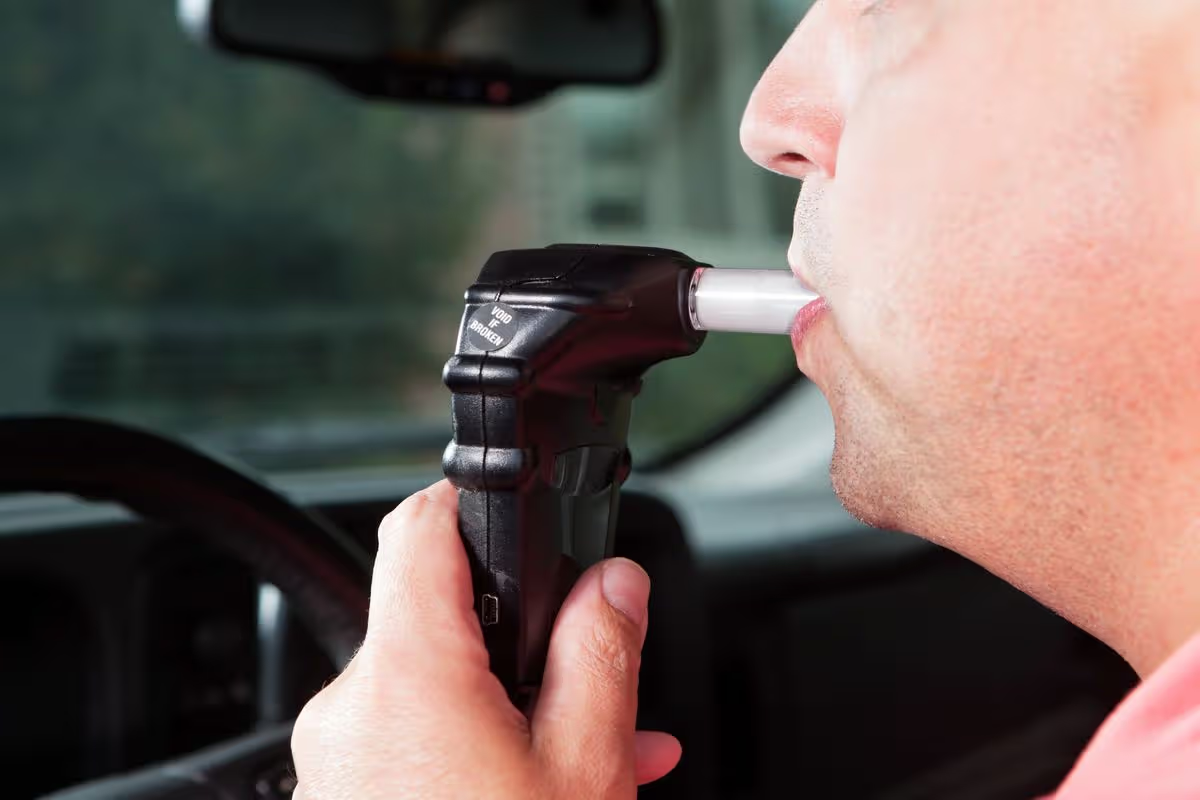
- How it's measured: Breath testing (roadside) or blood testing (after arrest/at hospital)
- Why limits exist: Safety data shows dramatically increased crash risk above 0.05
Drink driving accounts for 12.0% of fatal crashes involving risky road behaviour; however, positive breath tests have declined from 0.8% (2020) to 0.6% (2024), showing enforcement effectiveness (National Road Safety Data Hub, 2024).
2026 National Penalty Increases: What's Changed?
From 2026, drink-driving penalties jump nationally. Maximum fines increase to $2,204; on-the-spot penalties of up to $980 roll out progressively from early-to-mid 2026 for low-to-mid-range offences.
What triggered: tougher road safety focus. Which offences attract on-the-spot $980 penalties: low-to-mid-range offences (typically 0.05-0.149%). Rollout timeline by state: varies (early, mid, or late 2026 depending on jurisdiction). Implications: drivers have less time to consult lawyers before accepting on-the-spot penalties-financial pressure to pay roadside rather than fight in court.
2026 maximum fine jumps to $2,204 nationally (from ~$1,800); on-the-spot penalties of $980 roll out early-to-mid 2026 depending on state (Andatech 2026 Drink Driving Guide, 2026).
Low-Range Drink Driving (0.05-0.079% BAC)
Low-range drink driving carries fines around $1,000-$1,200 and a 3-6 month licence disqualification, with no jail time typically. Most states treat this as an infringement, though criminal records apply.
Penalty ranges by state (NSW, VIC, QLD, WA, SA, TAS), licence disqualification, criminal record implications, defences available all matter. Low-range fines vary by state; NSW approx. $2,200 post-2026 increase (Andatech, 2026).
Mid-Range Drink Driving (0.08-0.149% BAC)
Mid-range drink driving is treated as a criminal offence with fines around $2,500-$3,300 and 6-12 month licence disqualification. Jail sentences are possible, especially for repeat offenders.
State-by-state penalties, mandatory court appearance, licence interlock requirements (especially Victoria), criminal conviction implications all escalate. Victoria: almost every mid-range conviction now results in mandatory alcohol interlock requirement + 3-year zero BAC condition on licence return (TAC Victoria, 2025).
High-Range Drink Driving (0.15% BAC and Above)
High-range drink driving is a serious criminal offence with fines $5,000-$10,000+, 12-36 month licence disqualification, and possible jail sentences of 3 months to 2 years depending on prior record and circumstances.
State-by-state penalties, jail sentencing ranges, mandatory licence interlock, repeat offence penalties, impact on insurance and employment all significantly affect your life post-conviction. High-range offences carry jail time up to 2 years; Victoria mandates alcohol interlock + 3-year zero BAC for all convictions (TAC Victoria, 2025).
State-by-State Penalty Comparison
Penalties vary across all 8 states and territories. Victoria has the strictest enforcement (mandatory alcohol interlock); NSW introduced mandatory mid-range interlock in 2024; Queensland focuses on demerit points.
| State | Low-Range (0.05-0.079%) | Mid-Range (0.08-0.149%) | High-Range (0.15%+) |
|---|---|---|---|
| NSW | ~$2,200, 3-6 mo | ~$3,300, 6-12 mo + interlock | ~$5,500, 12-36 mo + jail |
| VIC | ~$2,000, 6-12 mo | ~$2,500, 12-18 mo + interlock | ~$5,000+, 24-36 mo + jail |
| QLD | ~$1,000, 1-9 mo disq | ~$2,500, 6-12 mo | ~$5,000+, 12-36 mo + jail |
| WA | $400-$1,200 | up to $2,500 | up to $3,000 + jail |
| SA | $600+ | $1,300+ | $2,500+ + jail risk |
| TAS | ~$1,000, 6 mo | ~$1,500, 12 mo | up to $3,000, 36 mo disq |
Licence Disqualification and Alcohol Interlock Requirements
Drink-driving convictions result in automatic licence disqualification (3 months to indefinite, depending on BAC and prior record). Victoria and NSW now mandate alcohol interlock devices on all convictions.
How long: 3 months (low-range) to indefinite (repeat high-range). Alcohol interlock requirements by state: Victoria = mandatory all convictions; NSW = mandatory mid-range & above. Cost of interlock installation/maintenance: $1,500-$3,000 annually. Interlock removal conditions: zero BAC for specified period (Victoria: 3 years).
Victoria: mandatory alcohol interlock + 3-year zero BAC condition on licence return for all drink-driving convictions (even low-range) (TAC Victoria, 2025).
Defences and Challenging Drink-Driving Charges
Defences to drink-driving charges include breathalyser inaccuracy, improper police procedure, rising blood alcohol (alcohol absorbed post-driving), and challenging BAC test administration.
Common defences: procedural errors (improper breath test administration, no proper caution), equipment calibration failures, rights violations (denying access to lawyer). Positive breath test decline from 0.8% (2020) to 0.6% (2024) shows enforcement effectiveness but also importance of accurate testing (National Road Safety Data Hub, 2024). Understanding the criminal process after charging helps you identify when defences apply.
Beyond the Fine: Long-Term Consequences
Drink-driving convictions affect employment, insurance, travel (visa denials), professional licensing, and housing. A criminal record lasts 10+ years depending on the state.
Criminal record implications: affects employment prospects (employer background checks), professional registration (nursing, teaching, law), insurance premium increases (car + home insurance), international travel consequences (visa denials, work permit refusals). Spent conviction eligibility varies by state-check your jurisdiction for removal options after 5-10 years with no further offences.
FAQ: Drink Driving Questions
What's the difference between on-the-spot penalty and court fine?
On-the-spot penalty ($980 in 2026) = immediate fine paid at roadside for low-to-mid range offences; court fine = imposed by court after trial/plea and is typically higher. On-the-spot avoids court appearance but creates criminal record.
Can I get my licence back after disqualification?
Yes, after the disqualification period ends. Some states require alcohol interlock periods before full reinstatement. Victoria requires 3-year zero BAC condition even after disqualification period.
What if I refused the breath test?
Refusal to take a breath test is itself an offence, typically with the same or worse penalties as a high-range drink-drive. Don't refuse.
How much does an alcohol interlock cost?
Installation: $800-$1,500. Monthly monitoring: $50-$100. Removal: $100-$300. Total cost over 12-month interlock period: $1,500-$3,000+.
Can I get my conviction removed or spent?
Spent conviction schemes exist in most states after a period (5-10 years) of no further offences. Sexual violence and serious offences cannot be spent. Check your state's eligibility.
Conclusion
Key takeaways:
- 0.05 BAC is the legal limit for full-licence drivers; zero for learner/P-plate drivers
- 2026 penalties increase nationwide: max fine $2,204, on-the-spot $980 for low-to-mid range
- Penalties escalate dramatically by BAC level (low-range ~$1K, mid-range ~$2.5K, high-range $5K+)
- Licence disqualification: 3 months (low) to 36 months (high)
- Victoria, NSW now mandate alcohol interlock for all convictions
- Criminal record lasts 10+ years; affects employment, insurance, travel
- Legal representation can help identify defences and negotiate outcomes
If you've been charged with drink driving, Law Firms Australia can connect you with a criminal defence specialist in your state. Early legal advice significantly improves outcomes. See our guide to the best criminal lawyers in your state and understand your legal representation costs.