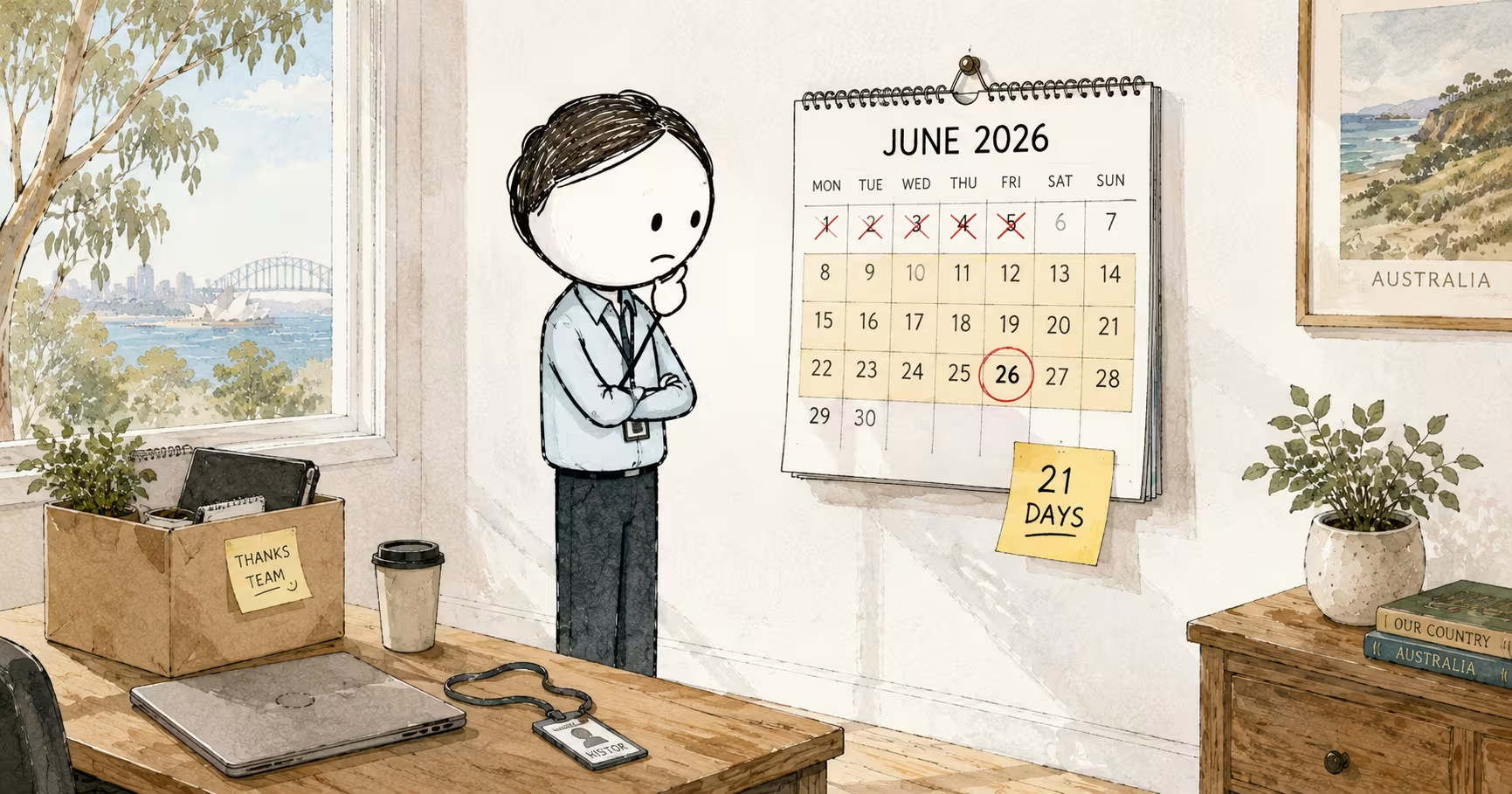
In 2024-25, 16,500 unfair dismissal applications were lodged with the Fair Work Commission (Fair Work Commission, 2025). Most of those workers had one thing in common: they acted fast. The rules are strict, the deadline is brutally short, and a single missed gate sinks an otherwise strong claim. Get fired on a Friday, and the clock is already running.
This guide walks you through it in order: what actually counts as unfair dismissal, whether you're eligible, how long you have, how to lodge, and what you can realistically expect to recover. Not sure where your situation fits? Start with the employment law in Australia complete guide.
TL;DR: To claim unfair dismissal in Australia you must lodge a Form F2 with the Fair Work Commission within 21 days of dismissal. You generally need 6 months' service (12 months at a small business) and must earn under $183,100 or be award-covered. Most claims (around 78%) settle at conciliation, with a median settlement near $8,704 and compensation capped at $91,550 (Fair Work Commission, 2025).
What Counts as Unfair Dismissal?
A dismissal is unfair when the Fair Work Commission finds it was harsh, unjust or unreasonable, and it was not a genuine redundancy or consistent with the Small Business Fair Dismissal Code (Fair Work Commission, 2026). All three limbs matter. A sacking can be lawful in form but still unfair in substance.
The Commission weighs two things. Was there a valid reason connected to your conduct or capacity? And was the process fair, meaning you were told the reason and given a chance to respond? An employer can have a genuine reason and still lose because they ambushed you with it.
Some dismissals are not unfair, no matter how much they hurt. A genuine redundancy, where the job itself disappears and consultation obligations are met, is not unfair dismissal, though you may still be owed redundancy pay. Dismissal for serious misconduct, handled properly, also usually stands.
A dismissal is unfair only if it was harsh, unjust or unreasonable, and was neither a genuine redundancy nor compliant with the Small Business Fair Dismissal Code (Fair Work Commission, 2026). The Commission examines both the reason for the dismissal and whether the process gave the employee a fair chance to respond.
Are You Eligible to Make a Claim?
You must meet the minimum employment period, 6 months, or 12 months at a small business with fewer than 15 employees, and either earn under the high income threshold of $183,100 for 2025-26 or be covered by a modern award or enterprise agreement (Fair Work Commission, 2026). Miss any one of these gates and the Commission cannot hear your claim.
Eligibility trips up more people than the merits ever do. If you earn above $183,100 and no award covers your role, you are out, full stop. Independent contractors are excluded too, though misclassification is common, so check whether you were really an employee in our contractor vs employee guide.
Casuals can sometimes claim. A regular, systematic casual with a reasonable expectation of ongoing work may qualify, and that casual service can count toward the minimum employment period.
Check before you lodge: Use the free Law Firms Australia unfair dismissal checker to test your eligibility and see how many days you have left, before you spend time on a claim the Commission can't hear.
To make a claim you need 6 months' service (12 months at a small business) and must either earn below the $183,100 high income threshold or be covered by an award or agreement (Fair Work Commission, 2026). Contractors are excluded, but regular casuals with an ongoing expectation of work may qualify.
How Long Do You Have to Lodge?
You have 21 calendar days from the date your dismissal takes effect, not 21 business days, to lodge an unfair dismissal application with the Fair Work Commission (Fair Work Commission, 2026). Weekends and public holidays count. If the 21st day falls on a weekend or holiday, the deadline rolls to the next business day.
This single rule deserves more attention than the rest of the process combined. The 21-day deadline is the most common reason valid claims fail. People spend the first fortnight in shock, gathering documents or waiting for a final pay slip, and discover too late that the window has closed.
The Commission can grant an extension, but only in exceptional circumstances, and it rarely does. Representing yourself, or simply not knowing the rule, is not an exceptional circumstance. Treat day one as the day you were told, and work backward from 21.
You have 21 calendar days, not business days, from when your dismissal takes effect to lodge with the Fair Work Commission (Fair Work Commission, 2026). Extensions are discretionary and rarely granted, which makes a missed deadline the single most common reason otherwise valid claims fail.
How Do You Apply to the Fair Work Commission?
You apply by lodging a Form F2 with the Fair Work Commission, online or by post, with an application fee that is indexed each year and can be waived if it would cause you serious financial hardship (Fair Work Commission, 2025). Online lodgment is fastest and confirms your filing date immediately.
The form asks who dismissed you, when, why you believe it was unfair, and what outcome you want. Be concise but specific. You do not need to argue your whole case here, just set out the essentials clearly.

Before you lodge, gather your evidence: the dismissal letter or email, your contract, recent pay slips, any performance warnings, and a short timeline of what happened. Once you lodge, the Commission notifies your employer, who files a response, and the matter is usually listed for conciliation within weeks.
To start a claim you lodge a Form F2 with the Fair Work Commission, online or by post, paying an annually indexed fee that is waivable for financial hardship (Fair Work Commission, 2025). The form sets out who dismissed you, when, why it was unfair, and the remedy you are seeking.
What Happens at Conciliation?
Most claims are resolved at conciliation, a confidential, phone-based negotiation run by a Fair Work conciliator, with around 78% of matters settling at this stage (Fair Work Commission, 2025). It is informal, private, and designed to reach a deal rather than decide who was right.
The conciliator does not judge your case. They move between you and the employer, test each side's position, and look for a settlement both can live with, often money, sometimes a statement of service or an agreed reference. Nothing said in conciliation can be used later if the matter proceeds.
Why do employers settle so readily? Because defending a hearing costs them time, legal fees and management attention, and the outcome is uncertain. A modest payment now is often cheaper than a fight, which is exactly why realistic expectations matter.
Here is the honest picture, and it is the part most law-firm pages gloss over. Of roughly 11,017 claims dealt with in 2022-23, only about 0.95% ended in a formal finding of unfair dismissal (ACAPMAg, 2024). The system is built to settle, not to litigate. Most "wins" are negotiated outcomes, not tribunal victories.
Conciliation is a confidential phone-based negotiation run by the Fair Work Commission, and around 78% of unfair dismissal claims settle there rather than proceeding to a hearing (Fair Work Commission, 2025). Only about 0.95% of claims result in a formal finding of unfair dismissal, so the realistic goal is a negotiated settlement.
If conciliation fails, the matter goes to a formal hearing before a Commission member, who decides the case and can order a remedy. Hearings are more legalistic, slower, and where having representation starts to matter, see the best employment lawyers in Sydney.
What Can You Recover If You Win?
The Commission can order reinstatement, compensation, or no remedy at all, and compensation is capped at the lower of 26 weeks' pay or half the high income threshold, which is $91,550 for dismissals on or after 1 July 2025 (Fair Work Commission, 2025). The cap is a ceiling, not a target.
Reinstatement is the primary remedy in law but rare in practice. Trust has usually broken down by the time a claim is heard, and few people want their old job back. Compensation is far more common.
Compensation covers lost earnings only. There is no component for hurt, humiliation or punishment, the Commission deducts any money you earned since dismissal, and it can reduce the award for misconduct on your part. That is why real-world settlements sit well below the cap, with a median around $8,704.
Remedies are reinstatement, compensation, or no order, with compensation capped at the lower of 26 weeks' pay or $91,550 for dismissals from 1 July 2025 (Fair Work Commission, 2025). Awards cover lost earnings only, with no penalty component, so the median settlement sits near $8,704.
Should You Get a Lawyer or Go It Alone?
Many applicants self-represent at conciliation, where the process is informal, but legal advice pays off when the matter is complex, the employer is well-resourced, or a hearing looms (Fair Work Commission, 2026). At the Commission, parties usually need permission to be legally represented at a hearing.
Free help exists before you reach for a lawyer. The Fair Work Commission publishes plain-English guides, and most states have a community legal centre or a workplace advice service that can review your situation at no cost. For a straightforward claim, that may be all you need.
Bring in a lawyer when the stakes justify the spend: a senior role, a large potential payout, a contested factual dispute, or an employer with its own legal team. To weigh the cost, see how much a lawyer costs in Australia, and note many employment lawyers offer no-win-no-fee arrangements.
What Are the Alternatives to Unfair Dismissal?
If you are ineligible for unfair dismissal, or you were dismissed for a prohibited reason, a general protections (adverse action) claim may fit instead, and it carries the same tight 21-day deadline (Fair Work Commission, 2026). General protections has no minimum service period and no income cap, which makes it the fallback for high earners and short-service employees.
The two claims target different wrongs. Unfair dismissal asks whether the sacking was harsh or unfair. General protections asks whether you were punished for exercising a workplace right, such as taking leave, raising a complaint, or your race, sex or disability.
Where discrimination drove the dismissal, you may also have options with the Australian Human Rights Commission or a state anti-discrimination body. If harassment was part of the picture, see sexual harassment at work. Pick the right pathway early, because each has its own deadline.
Frequently Asked Questions
How long do I have to claim unfair dismissal?
You have 21 calendar days from the date your dismissal takes effect to lodge with the Fair Work Commission, not 21 business days (Fair Work Commission, 2026). Weekends and public holidays count. Extensions are granted only in exceptional circumstances, so lodge as early as you can.
How much does it cost to lodge an unfair dismissal claim?
You pay a single application fee that the Fair Work Commission indexes each financial year for 2025-26 (Fair Work Commission, 2025). The fee can be waived in full if paying it would cause you serious financial hardship, so cost should never stop an eligible person from lodging in time.
How much compensation can I get for unfair dismissal?
Compensation is capped at the lower of 26 weeks' pay or half the high income threshold, which is $91,550 for dismissals from 1 July 2025 (Fair Work Commission, 2025). There is no payment for hurt or punishment, and real settlements are far lower, with a median around $8,704.
Will I get my job back if I win?
Rarely. Reinstatement is the Commission's primary remedy in law, but trust has usually broken down by the time a claim is decided, so compensation is the far more common outcome (Fair Work Commission, 2026). Most matters settle for a payment at conciliation, not reinstatement.
Can casual employees claim unfair dismissal?
Yes, in some cases. A regular and systematic casual with a reasonable expectation of continuing work may be eligible, and that casual service can count toward the minimum employment period (Fair Work Commission, 2026). One-off or genuinely irregular casual work usually will not qualify.
Conclusion
If you have been dismissed and think it was unfair, speed matters more than anything else. The strongest case in the country is worthless if you lodge on day 22. Key takeaways:
- You have just 21 calendar days from dismissal to lodge a Form F2 with the Fair Work Commission
- You generally need 6 months' service (12 at a small business) and must earn under $183,100 or be award-covered
- Around 78% of claims settle at conciliation; only about 0.95% reach a formal finding of unfair dismissal
- Compensation is capped at $91,550, covers lost earnings only, and the median settlement is near $8,704
- If you are ineligible, a general protections claim, with the same 21-day deadline, may apply
Check your eligibility now with the free Law Firms Australia unfair dismissal checker, then use the directory to find an independent employment lawyer in your state before the deadline passes.
Dig deeper into your employment rights:
- Employment Law in Australia: Employee Rights Complete Guide
- Redundancy Pay in Australia: What You're Entitled To
Related guides: