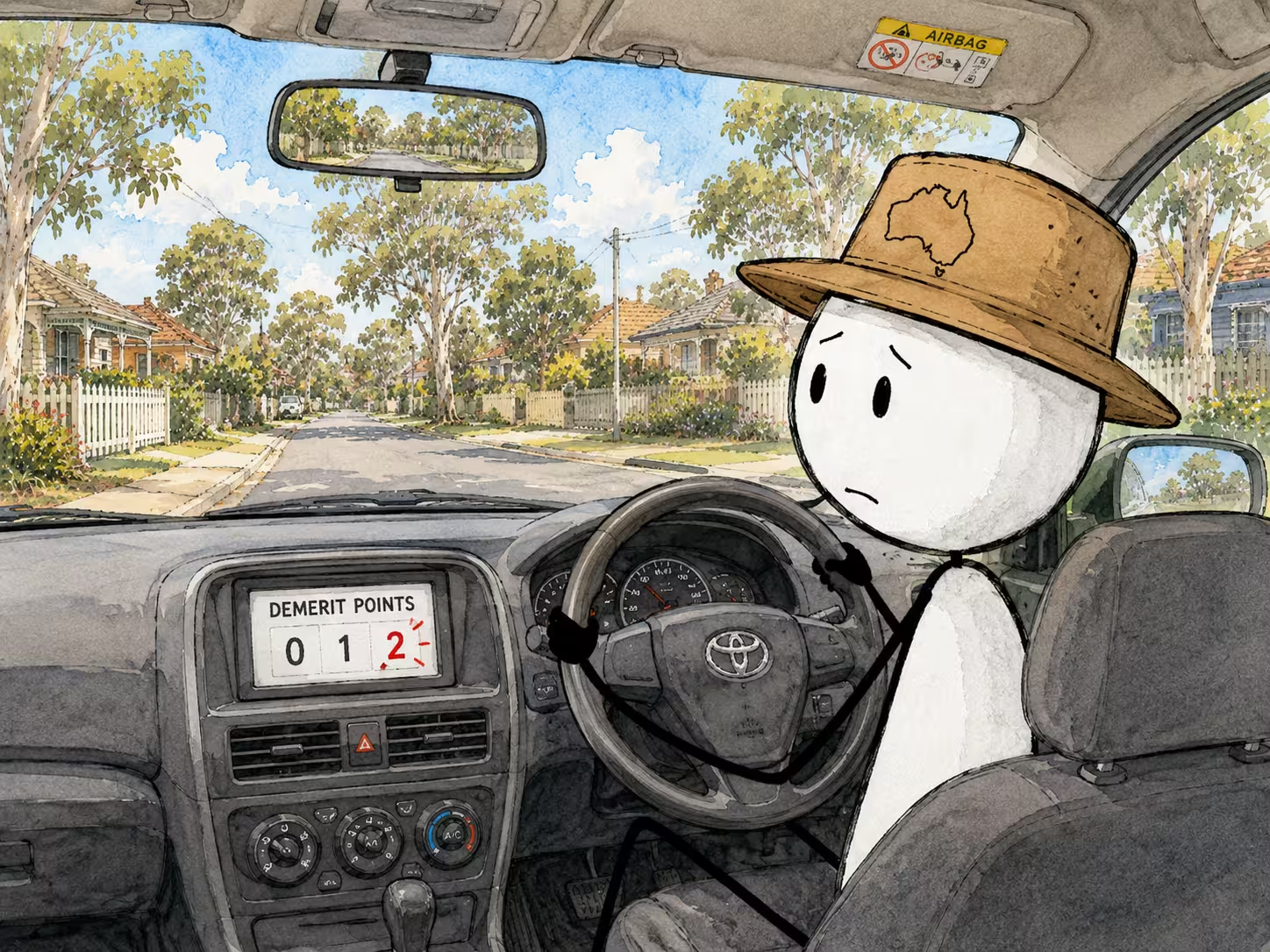
In Australia, demerit points are added to your licence for traffic offences, and you lose your licence once you pass your state's threshold (13 points in NSW, 12 in Victoria and most other states for a full licence). New South Wales alone issued more than 900,000 speeding fines in 2024, around 80% of them from cameras (myNRMA, 2024). Queensland was not far behind with roughly 800,000. For most drivers, the question is no longer whether they'll ever pick up a fine. It's how close each one pushes them to losing their licence.
The trouble is that every state runs the demerit system differently. The suspension threshold, the reset window, the holiday periods that double your points, and the size of the fines all change the moment you cross a border. An offence you commit interstate still lands on your home licence.
This guide breaks down how demerit points work in every state and territory, the exact thresholds for each licence class, the 2026 fine amounts, and the options that can keep you on the road if you're near the limit.
TL;DR: Australian full-licence holders lose their licence at 13 demerit points in NSW and 12 in Victoria and most other states, counted over a rolling three-year window (four years in Victoria). Points expire three years after each offence. NSW, the ACT and WA run double-demerit holiday periods; Victoria never does. Mobile-phone fines run from about $410 in Tasmania to over $1,078 in Queensland. If you're near your limit, a good behaviour period or a court election can save your licence. For the bigger picture, see our criminal law guide.
How Do Demerit Points Work in Australia?
Demerit points are penalties recorded against your driving record whenever you commit a traffic offence, and accumulating too many within a set period triggers an automatic licence suspension. Points attach to the driver, not the car, and sit on your home-state licence regardless of where the offence happened (NSW Government, 2026).
The count runs on a rolling window rather than a calendar year. There's no annual wipe on 1 January. Instead, each offence carries its own expiry date, and your "balance" is simply the sum of points that haven't yet expired.
One detail catches people out constantly: points are tied to the date of the offence, not the date you paid the fine or the date it appeared on your record. A fine you paid last month for an offence committed 18 months ago still counts from that earlier date.
Different offences carry different point values. Low-level breaches like a minor speed overshoot might add one point, while a serious offence such as high-range speeding or illegal phone use can add five or more. Stack a few together and a clean licence can be at risk inside a single year.
How Many Demerit Points Before You Lose Your Licence?
Full-licence holders are suspended at 13 points in NSW and 12 points in Victoria and almost every other state, measured over the rolling three-year window (NSW Government, 2026; Transport Victoria, 2026). The limit drops sharply for newer drivers, because provisional and learner licences carry far less tolerance.
In NSW the thresholds are 13 points for an unrestricted licence, 14 for a professional licence, 7 for a P2, and just 4 for a P1 or learner. Victoria sets 12 points for a full licence, 5 for probationary drivers, and 4 for learners.
That gap matters. A learner or P1 driver can reach suspension on a single five-point phone offence, while a fully licensed driver could absorb three of the same offences before facing the same outcome.
Our finding: the headline "12 points" figure that circulates online is misleading for the people most likely to lose a licence. New drivers operate on a quarter of the buffer that experienced drivers enjoy, yet they're the group most often quoted the full-licence number.
According to the NSW threshold structure, a P1 driver reaches the limit at 4 points while a professional driver has 14, a 3.5-fold difference for the same roads and the same offences (NSW Government, 2026). Knowing your own class is the single most useful thing you can do.
Demerit Point Thresholds and Fines by State
Thresholds cluster tightly at 12 points for full-licence holders everywhere except NSW, which sits at 13, but the fines and reset rules behind those numbers vary widely (Criminal Law Group, 2026). Queensland routinely runs the harshest dollar penalties, while Victoria counts points for the longest period.
The table below pulls the four dimensions that actually decide your exposure into one view: the suspension threshold for a full licence, how long points stay on your record, whether the state runs double-demerit periods, and the headline mobile-phone fine.
| State / Territory | Full-licence limit | Points expire after | Double demerits? | Mobile-phone fine |
|---|---|---|---|---|
| NSW | 13 points | 3 years | Yes (holidays) | ~$423 ($562 school zone) |
| VIC | 12 points | 4 years | No | ~$555 |
| QLD | 12 points | 3 years | Repeat offences | ~$1,078 (highest) |
| WA | 12 points | 3 years | Yes (holidays) | mid-range |
| SA | 12 points | 3 years | No | mid-range |
| TAS | 12 points | 3 years | No | ~$410 (lowest) |
| ACT | 12 points | 3 years | Yes (holidays) | mid-range |
| NT | 12 points | 3 years | No | mid-range |
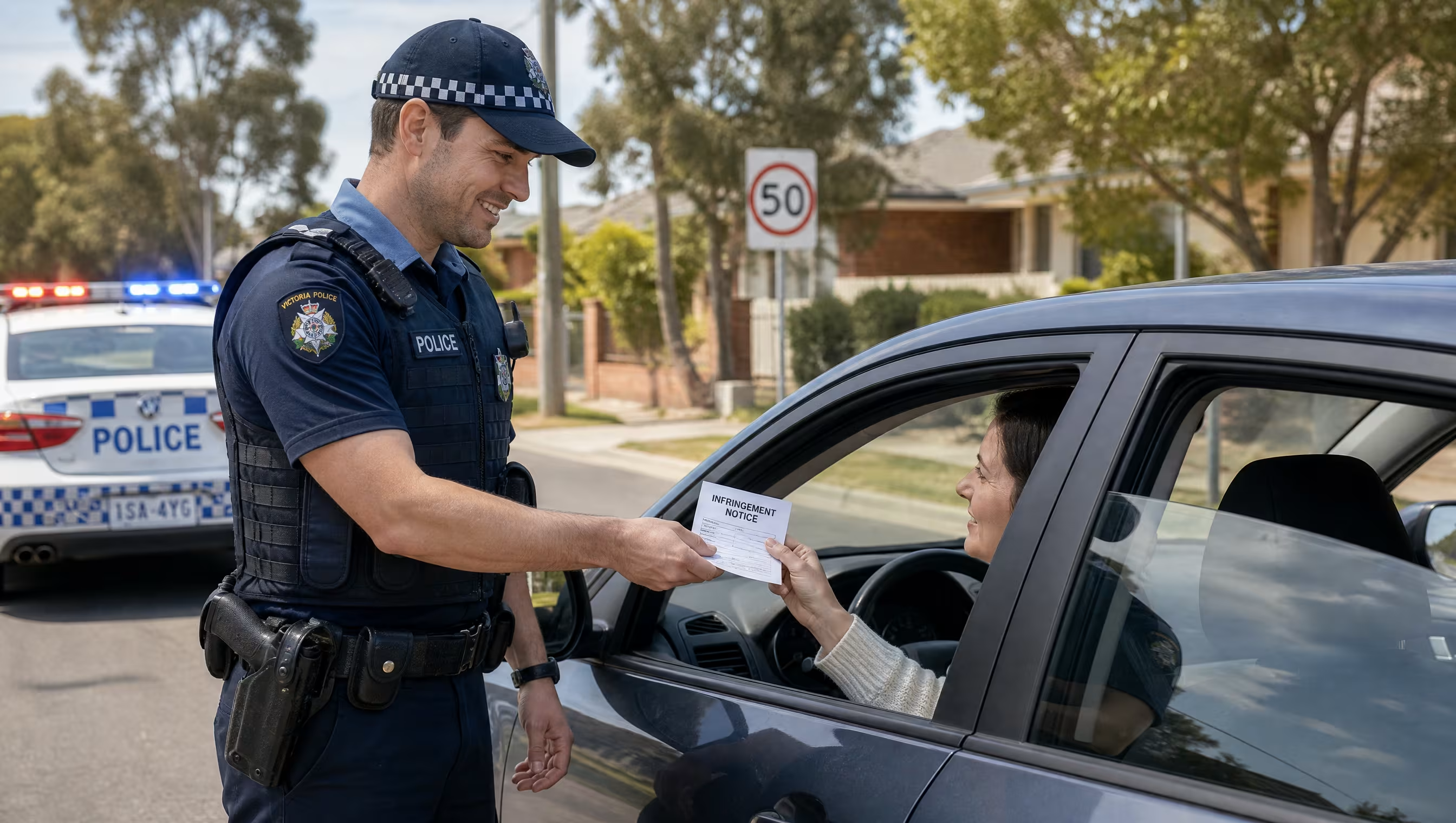
Mobile-phone fines show the widest spread of any common offence, running from about $410 in Tasmania to $1,078 in Queensland for a first offence (SpeedCam, 2026). NSW charges around $423 (rising to $562 in a school zone) and adds five demerit points, which doubles to ten during a double-demerit period.
What Are Double Demerit Point Periods?
NSW, the ACT and WA double or add demerit points during designated holiday periods, while Victoria never applies double demerits at any time of year (myNRMA, 2026). Queensland takes a different route entirely, doubling points for any repeat offence committed within 12 months of an earlier one in the same category.
In NSW, double demerits apply across six holiday windows in 2026: Australia Day, Easter, Anzac Day, the King's Birthday, Labour Day, and the Christmas and New Year period. During these windows, the offences that already cost the most, speeding, illegal phone use, seatbelt and helmet breaches, hurt twice as hard.
So why does Victoria refuse to play along? The state's road-safety position is that consistent year-round enforcement changes behaviour more reliably than holiday spikes. Whether or not you agree, the practical result is simple: a Victorian licence faces a flat rate every day of the year, while a NSW driver can lose ten points from a single Easter-weekend phone offence.
For interstate travellers this creates a genuine trap. If you're driving through NSW on a long weekend, the doubling applies to you even though your home state may not run the scheme. The location of the offence sets the rules, not where your licence was issued.
When Do Demerit Points Reset?
Demerit points expire three years from the date of the offence in every state and territory except Victoria, where they count for four years (Transport Victoria, 2026). There's no single annual reset date, and clearing your record is simply a matter of letting each offence age out.
Because the clock starts at the offence date, the timing can work in your favour or against it. Two points picked up in early 2023 drop off in early 2026, quietly restoring some of your buffer without any action on your part.
The catch is that a fresh offence never resets the older ones. It only adds its own points with their own expiry. People sometimes assume one clean year wipes the slate, but the only thing that reduces your balance is time passing on each individual entry.
Victoria's longer four-year window means a Melbourne driver carries each offence for a full year longer than a Sydney driver. Over an active driving life, that difference can be the deciding factor in whether a borderline record tips into suspension.
What Happens With Interstate Traffic Offences?
An offence committed in another state is recorded against your home-state licence and counts toward your home suspension threshold (SpeedCam, 2026). The fine follows the rules of the state where you were caught, but the demerit points come home with you.
This means a NSW driver who triggers a camera in Queensland pays under Queensland's penalty schedule, yet the points land on the NSW record and push toward the NSW threshold. The two systems talk to each other through a national data-sharing arrangement.
The double-demerit interaction makes this sharper. Drive through a state running a holiday doubling period and you inherit those doubled points, even if your own state has no such scheme. A relaxed road trip can quietly cost a driver far more than the same offence at home.
Can You Appeal or Avoid a Demerit Point Suspension?
Your options depend heavily on licence class: provisional and learner drivers can appeal a demerit suspension to a court, but NSW full-licence holders who reach 13 points cannot appeal the suspension itself (Legal Aid NSW, 2026). What full-licence holders can do instead is elect a good behaviour period, or take the underlying offence to court.
A good behaviour licence in NSW runs for 12 months and lets an unrestricted driver stay on the road in place of serving the suspension (Service NSW, 2026). The condition is strict: incur 2 or more demerit points during those 12 months and the original suspension is imposed at double the length.
The second route is a court election. By contesting the original offence in court, an unrestricted, learner or P-plate driver can have the demerit points set aside if the court records a non-conviction under section 10 or finds them not guilty (Legal Aid NSW, 2026). Win that, and the points never attach.
Timing is everything here. Appeal rights for provisional and learner drivers must be exercised before the suspension actually starts, so a notice sitting unopened on a kitchen bench can quietly close off every option you had.
What we'd check first on a demerit notice: (1) the exact offence date, since that sets when the points expire and whether they're even current; (2) whether a double-demerit period applied on that date; and (3) the threshold for your specific licence class, not the headline full-licence figure. Those three facts decide whether you're actually facing suspension or not.
When Should You Get a Traffic Lawyer?
Most infringements don't need a lawyer, but you should seriously consider one when an offence carries a criminal charge, when losing your licence threatens your job, or when you intend to court-elect (Legal Aid NSW, 2026). The line between an infringement and a criminal offence is where the stakes change completely.
Plenty of traffic matters sit firmly in criminal territory: high-range speeding, dangerous or reckless driving, and drink or drug driving can all carry convictions, not just points. If that's your situation, it's worth understanding what happens when you're charged with a criminal offence before you decide how to respond.
Cost is a fair concern, and you should weigh it honestly. A defended traffic hearing costs money, so it rarely makes sense for a minor single-point fine. It makes a great deal of sense when your livelihood depends on driving. Our guide to how much a lawyer costs in Australia sets out realistic ranges.
As an independent directory with no referral fees and no paid placements, our advice is straightforward: get a lawyer when the downside is large and contestable, and don't when it isn't. If you do need one, you can compare criminal and traffic lawyers in Sydney and other capitals through the directory. For drink-driving matters specifically, see our state-by-state drink driving penalties guide.
Frequently Asked Questions
How many demerit points before you lose your licence in Australia?
Full-licence holders are suspended at 13 points in NSW and 12 points in Victoria and most other states, measured over a rolling three-year period (NSW Government, 2026). Provisional and learner drivers face much lower limits, typically 4 to 7 points.
When do demerit points reset?
Points expire three years from the date of the offence in every state except Victoria, where they count for four years (Transport Victoria, 2026). There's no annual reset; each offence simply ages off on its own anniversary.
Do demerit points transfer between states?
Yes. An offence committed interstate is recorded against your home-state licence and counts toward your home threshold (SpeedCam, 2026). The fine follows the state you were caught in, but the points come home with you.
Does Victoria have double demerit points?
No. Victoria never applies double demerits at any time of year (myNRMA, 2026). NSW, the ACT and WA double points during designated holiday periods, while Queensland doubles points for repeat offences within 12 months.
Can you appeal a demerit point suspension?
Provisional and learner drivers can appeal a demerit suspension to a court before it starts (Legal Aid NSW, 2026). NSW full-licence holders at 13 points cannot appeal but may elect a 12-month good behaviour period or court-elect the offence.
Conclusion
Traffic offences carry the same fundamental risk everywhere in Australia, but the details that decide your fate change at every border. Keep these points in mind:
- Full-licence thresholds are 13 points in NSW and 12 in Victoria and most other states
- Points expire three years after each offence (four years in Victoria), not on an annual reset
- NSW, the ACT and WA double points during holiday periods; Victoria never does
- Interstate offences follow you home and count toward your own threshold
- Provisional and learner drivers operate on a quarter of a full licence's buffer
- A good behaviour period or court election can save a licence before suspension bites
If a suspension threatens your job, or the offence has tipped into criminal territory, early advice makes a real difference. Law Firms Australia can connect you with an independent traffic or criminal lawyer in your state. Start with our criminal law guide to understand your rights, then compare the best criminal lawyers in your city.